
Charina bottae (Rubber boa, RB) is a small, brown snake native to western North America. Since 2011, I have kept and bred this unique species. Below I discuss my captive husbandry to share with anyone interested in keeping this species or learning more about them.
In an effort to make this a concise guide (ha!), I assume the reader has some understanding on the basic supplies and methods to keep snakes in captivity. I am happy to give specific advice if more details are needed.
Do I claim the info below is the only (or best) way to keep this species?
No Way!
One thing I try to remember is Captivity ≠ Wild. We can try our best to get close, but we fail to mimic what nature provides. Besides, one could argue that nature is quite nasty and unpredictable. We provide our pets a stable environment with their food on a silver platter.
TABLE OF CONTENTS – jump to whatever section with a click
1. TEMPERAMENT
2. SETUP
3. HEATING
4. FEEDING
5. BRUMATION
6. SEXING
7. BREEDING
8. FEMALE CARE
9. BABY CARE
GREAT TEMPERAMENT
RBs are great snakes to introduce to folks with ophidiophobia (fear of snakes) because of their reluctance to bite. If startled, my boas make a thrashing motion that includes a quick release of air (hiss) and a tail slap with stinky musk as defense. That is likely enough to scare the shit out of someone not used to snakes. However, once out of their terrarium, my adult boas are calm and will wrap around my wrist for awhile until warm enough to explore on their own. Personally, I hold my snakes very little and when I do it is usually brief to check health (weight) or clean their bins. That said, many keepers do take their snakes out regularly, which is fine as long as there isn’t any obvious signs of stress.

SETUP
Whether you go with an elaborate individual enclosure or snake racks depends on personal preference, space availability, and future breeding adventures. How to house snakes in captivity can be a hot topic within the snake keeping industry with generally two sides: those that use racks versus those that use tank (terrariums). Both sides have valid arguments, and I believe it is up to the RB keeper. I keep it pretty basic when housing rubber boas and snakes in general.
Housing – Since my breeding colony has increased over the years, I keep my subadults and adults in a Vivarium Electronics VE-6 Rack (4″ THG Belly Heat) paired with a Vivarium Electronics VE-200 thermostat during the active season (March – October). I have had great success with Zilla Critter Cage Enclosures that can be found at most pet stores in the US (Petco, etc) matched with an Ultratherm Undertank Heater (UTH) connected to a JumpStart Thermosat.
Basic Supplies – Shredded Aspen Bedding and a Water Dish are the basics. These snakes like to burrow. Hide boxes are good accessories to include, but in my experience are not necessary if provided aspen as substrate. If the snake has trouble shedding, a humid box could be added as well.
[Image Soon!]
HEATING
I set the thermostat for a hot spot of 82℉ (28℃). Ambient temperature ranges from 68-78℉ (20-25℃), depending on the season. Summers get warm in the house and the higher temperatures do not seem to impact my collection. They keep their appetites during the warm months.
FEEDING
This is the #1 concern of many new rubber boa keepers. A healthy boa will eat, but they can and do fast (i.e., refuse for long periods). My own experience is with captive bred boas. If you collected a boa from the wild this adds another level of complexity when trying to switch their native prey preferences to lab-grown mice.
Newborn boas, regardless of sex, show high variation in appetite. It may be months before they take their first meal. It can become a waiting game that results in many uneaten mice.
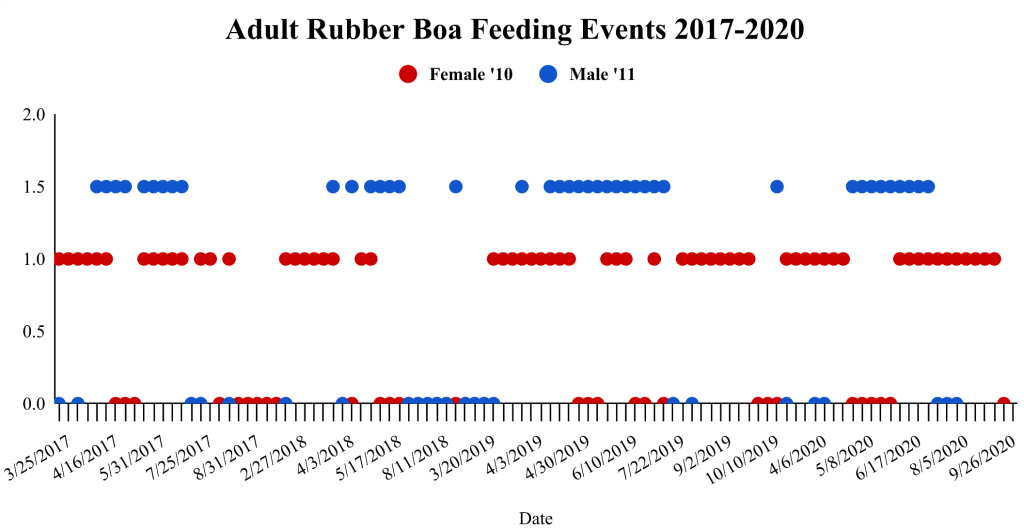
Sub-adults and adults, are easier to anticipate when seasonal fasting begins. Tracking their feeding schedules can help see these patterns, which require a couple years of feeding records. All of my captive-bred adult boas go through two seasons per year: a feeding season and a fasting season. When these seasons begin and end are different for my male and female boas, but are somewhat predictable. Let’s take a look at a threeo-year feeding schedule for one adult male (Wormtail) and one adult female (Annelia). You will notice a clustering pattern in feeding events in both sexes, but the male has longer gaps of refusing meals, or what I consider fasting periods.
You might be here looking for tricks to get a picky RB to eat. Many RB keepers try the following techniques in various combinations:
- Live pinkies
- Scent (live or frozen/thawed; f/t) pinkies with lizard, frog, vole, or chicken broth
- Wash off smell of f/t pinkies with dawn dish soap
- Boil f/t pinkies
- Create a small ‘nest’ of pinkies or hide them under some bedding
- Place RBs in a very small container overnight which keeps them in contact with the pinky
Are they successful? Maaaaaybe, but I’ve had limited sucess personally.
Sometimes the best method is to be patient with ‘stubborn’ feeders. Offer food every 2-3 weeks. Generally my snakes, including newborns, will eat but it is usually on their time and after many attempts. I have yet to have a rubber boa die from starvation.
SEXING
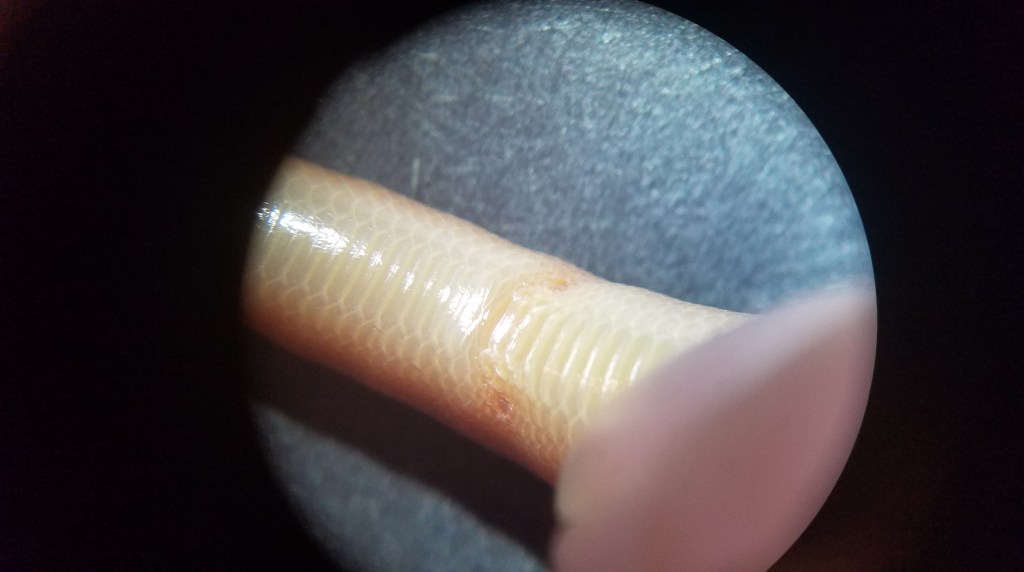
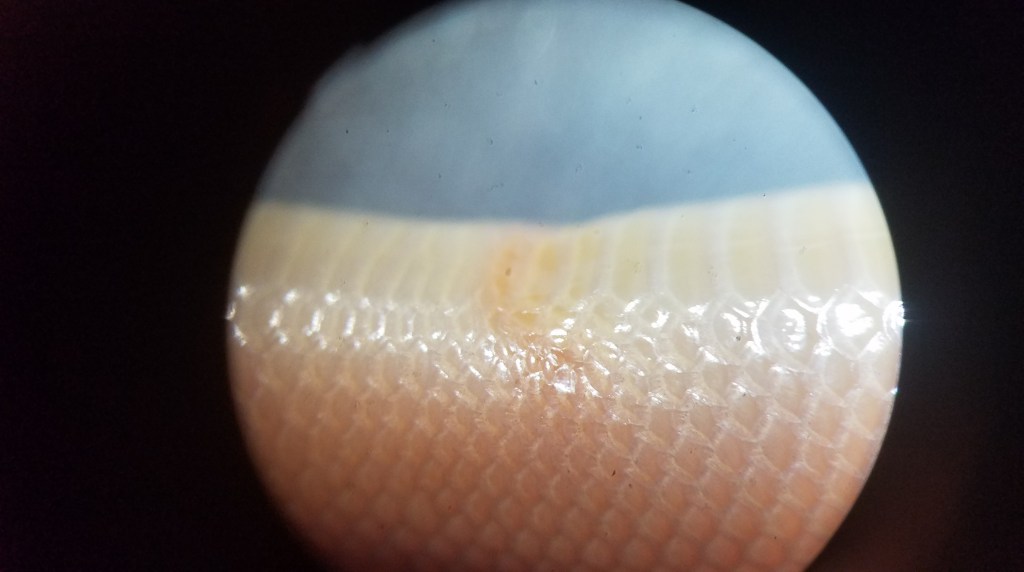
Sexing can be challenging on newborns because unlike colubrids (cornsnakes, kingsnakes), popping method doesn’t work on RBs. The best technique is to look for spurs near the vent (cloaca) of newborns. A simple magnifying class and an extra set of hands can help determine the sex. Females generally do not have spurs or have very small, nearly absent spurs. In contrast, males will have obvious spurs, even as newborns. You can see these spurs best with a magnifying glass. Determining the sex gets easier as the RB grows in size. Males stay much smaller than females and finding the spurs (or their absence) gets a lot easier.


BRUMATION
Brumation is a period of time when RBs are cooled to synchronize reproduction cycles in males and females for breeding in captivity. The gradual warming from a cooler period is likely an environmental cue in nature to develop reproductive cells, spermatogenesis in males and oogenesis in females.
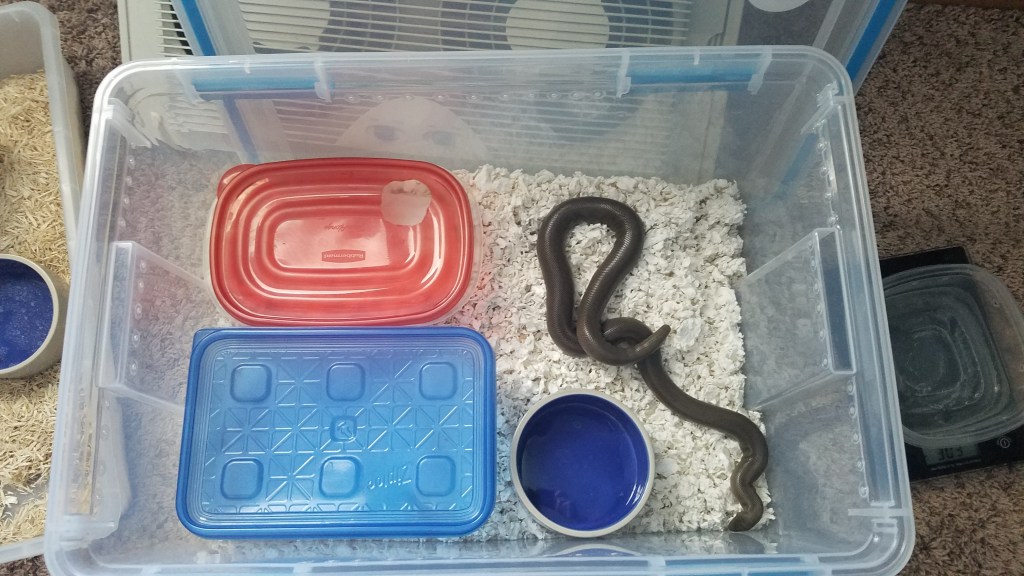
I live in a temperate region (North Dakota) and I can take advantage of the winter and a cold basement for brumation purposes. The basement temperature wavers around 50-55℉ (10-13℃). Maintaining this temperature in warmer climates is only possible with refrigeration, which I do not have direct experience with so I cannot give advice on this method.
Prior to brumation, my males have been fasting since August and females likely fasting by September. I always make sure snakes have at least 2 weeks to clear their digestive track before cooling them. I do cohabitate my adults during the brumation period, which starts October 31st (boo!) and ends eith on March 13th (males) or March 31st (females).

BREEDING
BREEDING
Males – once back in the snake rack, they will eat 1-2 times before breeding season begins. Once the females is back in the snake rack two weeks later, males stop feeding until the females ovulate and the breeding opportunities are completed (approximately 3-4 weeks).
Females – once back in the snake rack, they eat every 4-5 days throughout breeding season and sometimes throughout the entire pregnancy.
Breeding Method – I always introduce the male into the females cage. I let them cohabitate for 24-48 hours, remove the male so I can feed the female, wait 24hrs so that the female can digest, and then introduce the male again. I repeat this sequence of events for approximately 2 weeks.

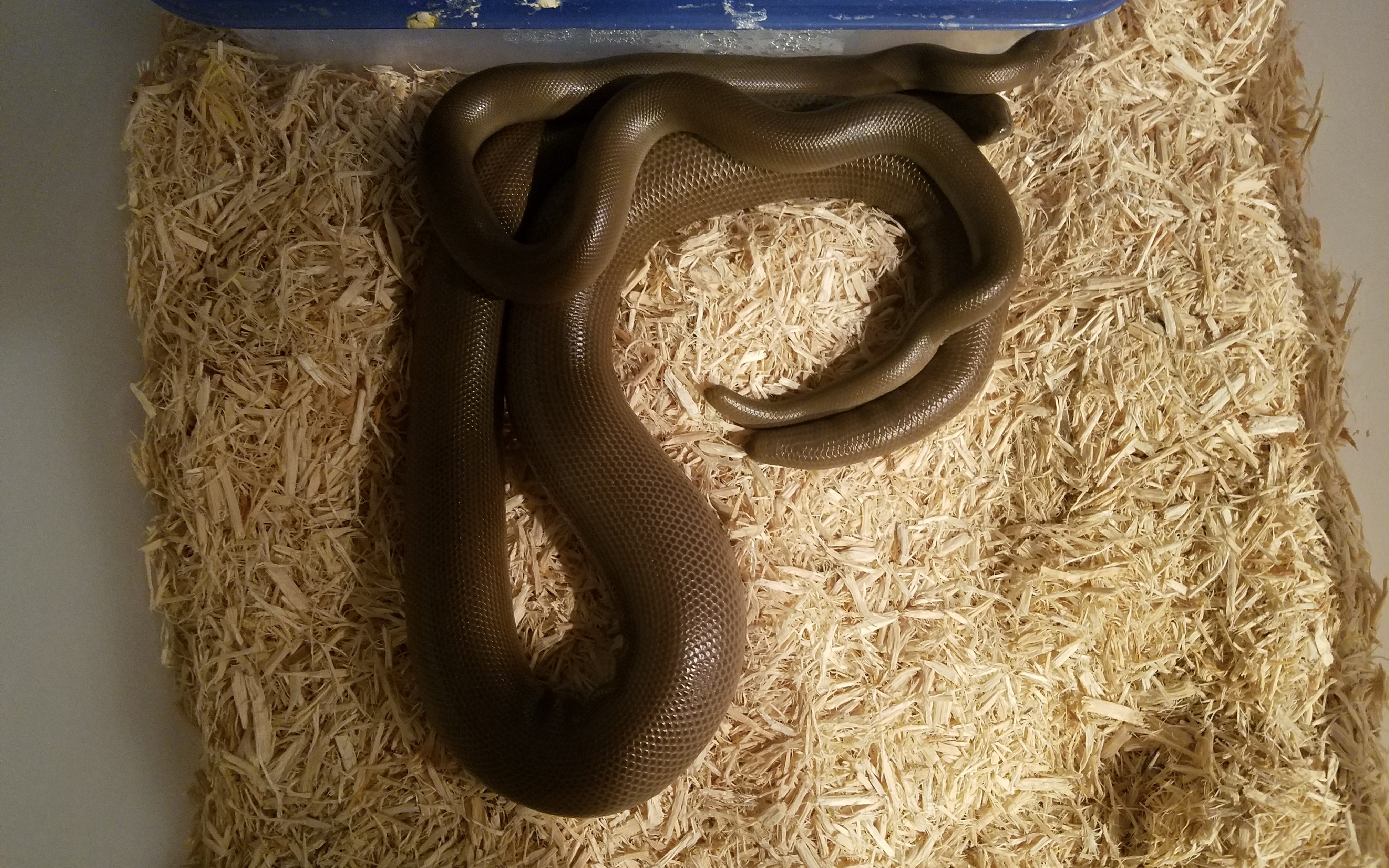
FEMALE CARE
PRENATAL – During the female’s pregnancy, I offer food every 4-5 days. For the most part my females will take all of these meals. However, they may skip a few. With the breeding schedule I use, females give birth around the end of July. Somewhere between 100-120 days after the first introduction of a male (early, mid-April) is when I start looking for babies. The mothers tend to get restless as the time nears and will twist their bodies in strange ways – all signalling birthing will start soon.

POSTNATAL – After giving birth, I wait for two days, then feed the female a smaller meal. Then, every 3-4 days I offer her a normal meal (1-2 adult mice). They can look pretty deflated after birth, but surprising recover quickly.
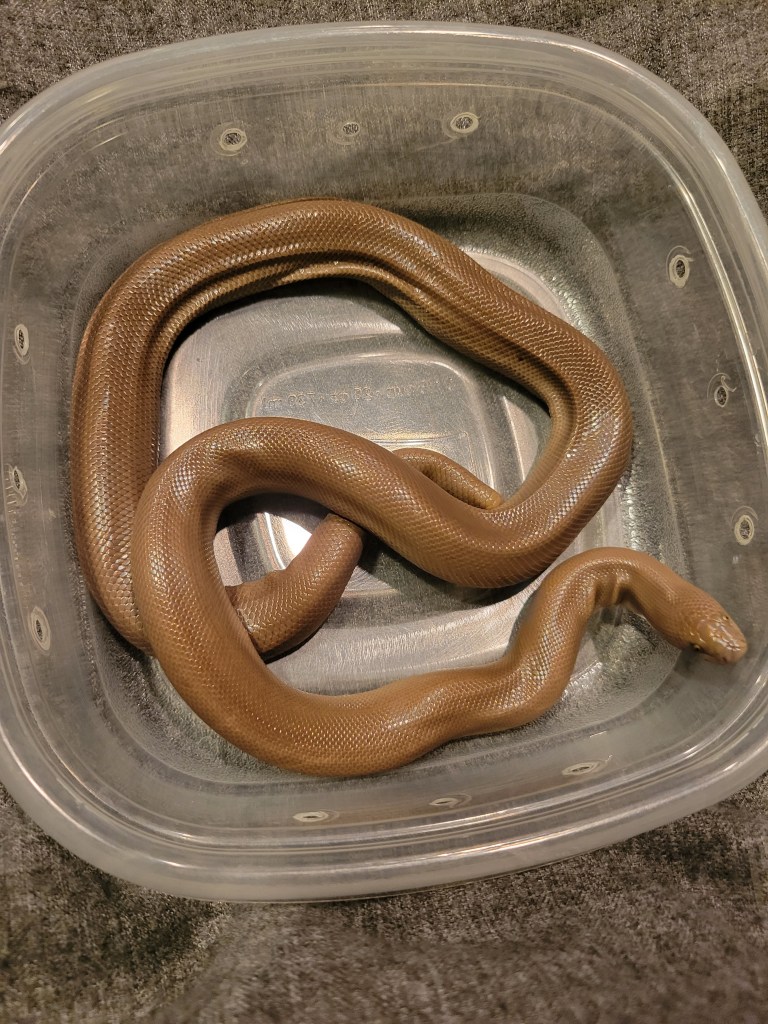
BARY CARE

I separate all babies and place them into their own container. This makes it easier for me to keep track of which are eating and which are fasting. There are a few breeders that will place the babies in brumation without attempting to feed them. Thus far, I have gone the opposite route. I maintain them at room temperature until they eat. I wait to offer them food until their first shed.


All of the babies in my first three litters ate within a month or two of birth. This fourth and biggest litter of babies (7!) have been highly variable in their appetite. Three of seven have eaten multiple meals, but the remaining 4 have yet to take their first meal. I decided to keep them out of brumation and currently house them at room temperature, offering a f/t pinky every 2-3 weeks.
In my experience, brumation of new borns is not necesary.
I have kept both feeders and non-feeders at both room temperature and cold storage (brumation) and have not experienced any appetite improvements in the brumated group. It seems babies will eat when they are ready, regardless of environmental temperatures. Generally the early spring seems to trigger appetites in those that refused during later summer or fall of their birth year.
Another observation is that brumated newborns will refuse the following winter, whereas non-brumated newborns have contiuned to eat through their second winter. Because non-brumated newborns eat throughout their 2nd winter, and gain more weight, I have decided to stop brumating newborns.
 Zack Bateson, Ph.D.